Bank Failure in Paraguay and the Revolut Outage 2026: Why You Should Spread Your Assets Across Several Banks and Jurisdictions
Within two weeks, two completely different events showed the same thing. On 20 October 2026, a power failure at a Google data centre near London took Revolut down across Europe for a working day. On 2 November 2026, Paraguay's central bank put Ueno Bank into resolution – a bank failure that locked around three million customers out of their money. Anyone relying on a single bank or a single country is unable to act in such moments. This article analyses both cases and shows how to structure your assets so you stay able to pay.
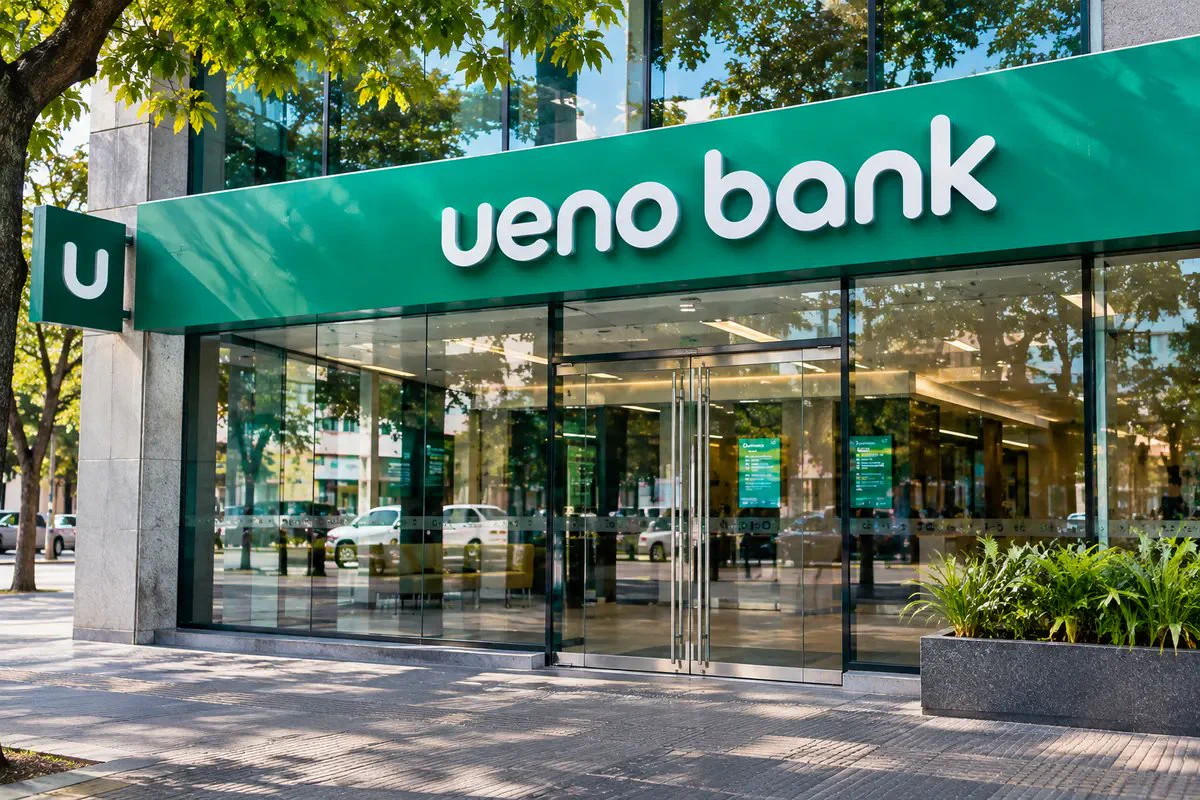
- ✛Ueno Bank, Paraguay's largest bank by number of customers, was put into resolution on 2 November 2026 due to insufficient capital. App, cards, ATMs and branches were blocked overnight.
- ✛Deposit insurance in Paraguay covers at most 75 minimum wages (around PYG 228 million, roughly USD 37,000) per customer and bank. It is paid in guaraní, even for dollar accounts, and only into an account at another bank.
- ✛The Revolut outage on 20 October 2026 was not a failure but a technical outage: a power event in Google Cloud zone europe-west2-b blocked card payments, transfers and log-ins for hours.
- ✛Both cases reveal the same concentration risk: one bank, one country or one technology provider fails – and you lose access to your money.
- ✛The solution is deliberate diversification: at least two independent banks in at least two jurisdictions, different card networks and a liquidity reserve of three to six months.
Bank failure in Paraguay: what happened at Ueno Bank
Ueno Bank was a flagship of Paraguay's financial sector: a digital bank licensed in 2023 that became the institution with the most customers in the country after absorbing Vision Bank. In June 2026 it reported around 2.94 million customers – about 63% of the adult population. According to Moody's, Ueno held around 8% of loans and 9% of deposits in the banking system in September 2026. It also held state and social security (IPS) funds of around USD 800–850 million in total, including roughly USD 355 million from IPS.
On 29 October 2026 the bank told the Central Bank of Paraguay (BCP) that it could not replenish around USD 70 million of its reserve requirement. On 2 November the BCP board unanimously decided on resolution: after adjustments to the financial statements, the solvency ratio was below half the legal minimum. A USD 100 million capital plan announced by the owners shortly before came too late.
| Date | Event |
|---|---|
| 29 October 2026 | Ueno tells the BCP it cannot replace around USD 70 million of reserves |
| 2 November 2026 | BCP decides on resolution (solvency below 50% of the minimum); all services suspended |
| 3–4 November 2026 | Law allows advance payment from the deposit guarantee fund; BCP president resigns; arrest warrants for bank executives |
| 5 November 2026 | First payments of up to PYG 10 million (around USD 1,565) to customers with an account at another bank |
| 6 November 2026 | After President Santiago Peña's resignation, Vice President Pedro Alliana takes office |
| 17 November 2026 | Legal deadline for paying guaranteed deposits (extendable to 2 December) |
For customers this meant that overnight neither the app nor cards, ATMs or branches worked. Merchants and suppliers settling through Ueno lost their payment flows. The banking association Asoban stressed that the other banks were operating normally and there was no contagion. Nevertheless, Moody's sees the failure as a sign of weak supervision and institutional problems. According to Infobae, the guaraní lost around 12% of its value from late October.
Anyone considering emigration should know this case. Paraguay remains attractive thanks to territorial taxation and a simple residence procedure – as our guide Moving to Paraguay 2026 shows. But the Ueno crisis proves that a local bank account alone is not a safe foundation.
Revolut outage: one data centre, millions of blocked cards
On Tuesday 20 October 2026, from around 7am UK time, Revolut cards were declined across Europe. Transfers, currency exchange, trading, cash withdrawals and even app log-ins also failed. Revolut's status page listed around 30 services as partially unavailable during the day. According to Euronews and Google, the cause was a "power event" in zone europe-west2-b of Google Cloud's London data centre, which hosts core Revolut systems.
In the early evening Revolut reported that services had been restored and that customer funds and data were never at risk. That is an important difference from Paraguay: Revolut was not insolvent – the money was there, just not accessible. For anyone who had to pay a hotel, transfer salaries or fill up abroad that day, it made no difference.
Since January 2025 the EU Digital Operational Resilience Act (DORA) has required banks to withstand failures of IT and cloud providers. The Revolut incident reignited the debate about dependence on a few large cloud providers. For you as a customer, however, regulation does not prevent an outage – it only governs how the bank deals with it afterwards.
Two events, one pattern: concentration risk
A bank failure and a data centre outage have different causes. For you as an account holder, the result is the same: you can no longer pay. The risks that can lead to such a lockout fall into four groups:
| Risk | Example | Typical duration | What helps |
|---|---|---|---|
| Bank insolvency | Ueno Bank, Paraguay 2026 | weeks to years (above the guarantee limit) | second bank, balances below the guarantee limit |
| Technical outage | Revolut / Google Cloud, October 2026 | hours to days | second bank with its own infrastructure, different card network |
| Country risk | capital controls, devaluation, political crisis | months to years | account in a second jurisdiction and currency |
| Compliance freeze | KYC review, sanctions screening, account closure | days to months | independent second bank, complete documents |
The last point is especially underestimated. Banks freeze accounts even without a crisis, for example during a KYC review or after an unclear payment. Our article on rejected transfers and sanctions screening shows what that looks like in practice. The most common mistakes when setting up a foreign account are summarised in Offshore account: mistakes and risks.
What deposit insurance covers – and what it does not
Many savers rely on deposit insurance. The Ueno case shows its limits:
- ✛Cap: In Paraguay at most 75 minimum wages are covered, around PYG 228.3 million or roughly USD 37,000 per person and bank. According to the BCP, around 97% of customers were below this. Larger balances – typically held by entrepreneurs and companies – go into liquidation.
- ✛Time: The first tranche was only PYG 10 million (around USD 1,565). The full guarantee must be paid within 15 days, extendable by a further 15 days.
- ✛Currency: Customers with dollar balances receive the guarantee in guaraní – a currency that is depreciating.
- ✛Second account required: Payments went first only to customers with an account at another bank. Around 262,000 Ueno customers had none and had to wait for a later stage.
- ✛Set-off: Outstanding loans with the bank are deducted before payment.
In Switzerland, esisuisse protects deposits up to CHF 100,000 per customer and bank; in the EU the limit is EUR 100,000. Entrepreneurs with working capital and reserves reach these limits quickly. Also check whether your balance is held as a bank deposit or as e-money: e-money institutions protect client funds through safeguarding accounts, but not through deposit insurance. Securities in a custody account, by contrast, are not part of the bank's insolvency estate but are segregated.
The solution: spread your assets across several banks and jurisdictions
Every investor knows diversification in a portfolio. For accounts, countries and payment channels it is often forgotten. Our approach at SWICOR: every function of your finances should have at least one independent fallback – at another bank, in another country and on different technical infrastructure. This is the core of flag theory, applied to banking.
- ✛At least two jurisdictions: One account in your country of residence for daily use, a second in a stable third country. Crises like Paraguay's are usually confined to one country.
- ✛Independent banks: Two neobanks on the same cloud offer little protection. Combine a traditional bank with its own infrastructure with a digital solution.
- ✛Several currencies: CHF, EUR and USD spread devaluation risk. The guaraní lost around 12% from late October.
- ✛Different card networks: At least one Visa and one Mastercard from different banks.
- ✛Balances below the guarantee limit: Where possible, keep balances per bank below the relevant deposit guarantee.
- ✛Liquidity reserve: Three to six months of expenses immediately available – in an account that does not depend on your main bank.

Depending on your profile, suitable second jurisdictions include Switzerland for high stability, Georgia for fast remote opening and accounts in USD, EUR and GEL, or a US account for dollar business. How the countries compare is shown in Swiss bank account or Georgia? and Bank account outside the EU.
Model structure: how to stay able to act
The following structure is a starting point for individuals and entrepreneurs with international activities. The details depend on residence, business model and assets.
| Role | Example | Purpose | Note |
|---|---|---|---|
| Everyday account | bank in your country of residence or EU neobank | salary, direct debits, card payments | short-term liquidity, no reserves |
| Reserve account | Swiss bank | savings, multi-currency CHF/EUR/USD | ideally below CHF 100,000 per bank |
| Third account | Georgia or USA | independent ability to pay, USD business | remote opening possible |
| Business account | company bank in its jurisdiction | company payments separate from private assets | second company bank for emergencies |
| Custody account | custodian in a stable jurisdiction | long-term assets | securities are segregated assets |
| Emergency reserve | cash, crypto in self-custody | bridging a total outage | small share, declare for tax |
With crypto assets, custody matters: balances on an exchange carry the same counterparty risk as a bank account. More in our article on CARF reporting and self-custody. For entrepreneurs, a company in a second jurisdiction can also make sense – see company formation abroad.
Checklist: reduce your bank failure risk in 7 steps
- 01List all accounts, cards and balances – with bank, country, currency and guarantee limit.
- 02Check whether more than 50% of your liquidity sits with a single bank or in a single country.
- 03Open a second bank in another jurisdiction. The required documents are in our KYC checklist for offshore accounts.
- 04Use the second bank actively – dormant accounts are more likely to be reviewed or closed.
- 05Carry cards from different networks and banks, including one physical card.
- 06Hold a reserve of three to six months' expenses outside your main bank.
- 07Test once a year: can you pay, transfer and withdraw cash for a week using only the second bank?
How to open a foreign account without travelling is described in Opening an offshore account remotely.
Tax and reporting: diversifying does not mean hiding
Diversification protects against outages; it is not a tool against the tax office. Foreign accounts must be declared in your country of residence, and most states exchange account data automatically under the Common Reporting Standard. Which countries report and which do not is shown in Foreign accounts and the tax office 2026. A clean structure combines security with full disclosure – the basis of any legal tax optimisation.
Conclusion
The Ueno Bank failure and the Revolut outage have different causes but the same lesson: anyone holding their money at one bank, in one country and on one infrastructure is unable to act when it matters. In Paraguay customers first received around USD 1,565, in guaraní and only into an account at another bank. At Revolut the money was safe but unusable for a day.
We therefore recommend deliberately spreading assets and liquidity across at least two independent banks in at least two jurisdictions, using several currencies and card networks, and holding a reserve outside your main bank. The cost is small compared with weeks without access to your own money. SWICOR – SWISS CORPORATE SOLUTIONS helps you open bank accounts abroad, plan your residency and build a resilient structure – remotely and at transparent fixed prices.
Frequently asked questions
What happened to Ueno Bank in Paraguay?
The Central Bank of Paraguay put Ueno Bank into resolution on 2 November 2026 because its solvency ratio had fallen below half the legal minimum. All services were suspended and around three million customers lost access to their accounts.
How much will Ueno customers get back?
Up to 75 minimum wages are guaranteed, around PYG 228.3 million or roughly USD 37,000 per person. The first tranche was up to PYG 10 million. Amounts above that go into liquidation.
Why was Revolut unavailable on 20 October 2026?
A power event in Google Cloud zone europe-west2-b near London took down core systems. Card payments, transfers and log-ins failed for several hours. According to Revolut, customer funds and data were safe.
How many bank accounts should you have?
At least two at independent banks in two different countries. Entrepreneurs with international business often do best with three accounts in two to three jurisdictions.
Is a foreign bank account legal?
Yes. Foreign accounts are legal but must be declared in your country of residence. Most countries exchange account data automatically.
Which countries suit a second account?
Often Switzerland for stability and wealth management, Georgia for fast remote opening and multi-currency accounts, and the USA for dollar business. Residence, business model and documents are decisive.
Open a second account in another jurisdiction?
We analyse your current banking setup and open suitable accounts in Switzerland, Georgia or the USA – remotely and at fixed prices.
This article is a general analysis and does not replace individual tax, legal or investment advice. Information on Ueno Bank is based on statements by the Central Bank of Paraguay and media reports up to 7 November 2026; the proceedings are ongoing. The position at the date of publication applies.