CARF Crypto Reporting: What the Bundestag Decided – and Why Self-Custody Matters Now
On 8 October 2026, the German Bundestag approved the international exchange of information on crypto assets under the OECD's CARF standard. German tax offices will thus also learn about trades on foreign platforms – the first exchange with third countries is planned for September 2027. We explain exactly what CARF crypto reporting covers, what it does not, the position in Switzerland and why a hardware wallet is becoming more important for your security and data sovereignty.
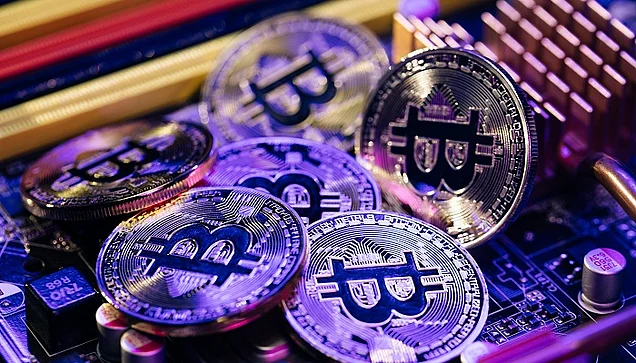
- ✛On 8 October 2026, the Bundestag approved the law on the CARF agreement, extending crypto data exchange beyond the EU to third countries.
- ✛Reported: name, address, date of birth, tax ID, tax residence plus type, gross amounts, units and number of transactions – aggregated, not individually.
- ✛Data collection since 1 January 2026 (DAC8/KStTG), first reports by 31 July 2027, international exchange from September 2027.
- ✛Taxation does not change: the holding period and exemption limit still apply.
- ✛A hardware wallet does not make anything invisible for tax purposes, but it protects against exchange failures, hacks and data leaks – and gives you sole control of your keys.
What the Bundestag decided on 8 October 2026
The Bundestag passed the law ratifying the Multilateral Competent Authority Agreement on Automatic Exchange of Information pursuant to the Crypto-Asset Reporting Framework (Drucksache 21/7195). CDU/CSU, SPD, the Greens and the Left voted in favour, the AfD against. Germany had already signed the agreement in November 2024 together with 26 other states.
It is based on the OECD's Crypto-Asset Reporting Framework (CARF) from 2022. Within the EU, crypto data is already exchanged under the DAC8 directive, which Germany implemented with the Crypto-Asset Tax Transparency Act (KStTG) of 22 December 2025. What is new is the extension to third countries: trades on platforms outside the EU are to become equally traceable for tax offices.
Important: the decision does not change the taxation of cryptocurrencies itself. It concerns only the reporting and exchange of information. The same evening, the Bundestag rejected a bill to abolish the one-year holding period by 445 votes to 132.
What is reported under CARF
Reporting obligations apply to crypto-asset service providers – exchanges, brokers and custodians. Per user and year they report:
| Area | Reported information |
|---|---|
| Personal data | Name, address, date of birth, tax identification number |
| Tax residence | All states in which the user is tax resident |
| Transactions | Type of crypto asset, gross amounts, units, number of reportable transactions |
| Transaction types | Exchange for fiat, crypto-to-crypto, transfers – including to self-custody wallets |
| Companies | Additionally the controlling persons behind the structure |
Reporting is aggregated per crypto asset and transaction type, not every single transaction. New customers must provide a self-certification with tax residence and tax ID before their first trade. If it is missing, the provider must block reportable transactions under the KStTG after 60 days at the earliest and 90 days at the latest.
A holding or foreign company does not prevent attribution, as controlling persons are also reported. More on international structures in our article on permanent representatives and CFC taxation.
Timeline: what happens when
| Date | Step |
|---|---|
| 1 January 2026 | Crypto service providers in the EU start collecting data (DAC8/KStTG) |
| 8 October 2026 | Bundestag approves the CARF agreement with third countries |
| 31 July 2027 | First reports by providers to the Federal Central Tax Office (BZSt) for 2026 |
| September 2027 | First automatic exchange with third countries for 2026 data |
According to the German government, 46 jurisdictions plan to exchange from 2027. The US is not participating for now. Data from 2026 will thus become visible retroactively – anyone who has not fully declared gains should review this now.
And Switzerland?
Switzerland has also committed to CARF. The revised Federal Act on the International Automatic Exchange of Information in Tax Matters (AEOIA) has been in force since 1 January 2026. According to the State Secretariat for International Finance (SIF), however, the AEOI on crypto assets will be implemented no earlier than 1 January 2027, as the list of partner states has not yet been set.
For Swiss investors, 2026 remains quiet, but the direction is clear. In Switzerland, crypto assets must be declared in the tax return in any case (wealth tax). An overview of the German position is given in our article on crypto tax in Germany 2027.
What CARF does not cover – and why self-custody is still no hiding place
CARF applies to providers. A self-custody wallet whose keys only you know does not report any data itself, and the state has no technical access to it. Purely decentralised activity without a reporting provider is currently not covered by CARF and DAC8.
However: if an exchange transfers crypto assets to a self-custody wallet, this transfer is reported with its count and total value. A hardware wallet therefore does not make transactions invisible for tax purposes. Your obligation to declare correctly remains unchanged.
A transfer between your own wallets is generally not a disposal for tax purposes. Document your wallet addresses and transfers carefully so you can prove holding periods and acquisition costs at any time. Otherwise, estimates to your disadvantage may apply where the purchase price is unknown.
Why a hardware wallet matters more now
With CARF, every exchange builds extensive data sets: identity, tax ID, residence and asset movements – stored by platforms, authorities and in international exchange. The more copies of sensitive data exist, the greater the risk of data leaks, phishing and targeted attacks on known crypto holders.
The answer is not hiding but control. A hardware wallet keeps your private keys offline – protecting you from the risks that lie with exchanges:
- ✛No counterparty risk: if an exchange goes bankrupt or is hacked, crypto assets in your own wallet are not affected.
- ✛No account freezes: exchanges may have to block accounts under the KStTG. On your own wallet, only you decide over your crypto assets.
- ✛Data minimisation: long-term holders only need the exchange for buying and selling – not as a permanent place to store assets and data.
- ✛Protection from online attacks: keys never leave the chip and are therefore shielded from malware and phishing.
This reflects our approach to asset protection: legal, declared and yet as discreet and independent as possible. More in our article on the EU asset register.
The SWICOR solution: Tangem hardware wallet
For secure self-custody, we recommend the hardware wallet of our partner Tangem to our clients. Tangem AG is headquartered in Zug – a Swiss company like SWICOR. Since 2017, over 6 million devices have been sold, and according to Tangem none has been hacked to date.

- ✛Certified security chip: developed with Samsung Semiconductors and certified EAL6+ – the security level of biometric passports.
- ✛Audited firmware: independently reviewed by Kudelski Security and Riscure. The app is open source.
- ✛Seedless: the private key is generated in the chip and never leaves it. Backup uses additional cards instead of 24 words on paper. A classic seed phrase remains optional.
- ✛Simple: activation in about two minutes, signing via NFC by tapping your smartphone – no cables, battery or charging.
- ✛Robust: waterproof to IP69K, resistant to X-rays and electromagnetic pulses, 25-year limited hardware warranty.
- ✛Broad support: over 14,100 crypto assets on more than 90 blockchains, including Bitcoin, Ethereum, Solana and stablecoins.
- ✛Independent of Tangem: transactions run without Tangem servers – only between card, smartphone and blockchain. The wallet keeps working even if Tangem ceases to exist.
Tangem products at a glance
| Product | Contents | Suited to | Price (Oct 2026) |
|---|---|---|---|
| 2 Cards Set | Two cards (wallet + backup) | Entry level, smaller holdings | USD 54.90 |
| 3 Cards Set | Three cards (wallet + two backups) | Our recommendation for most investors | USD 69.90 |
| Family Pack | Two sets for two separate wallets | Couples, families, separating private and business | USD 129.80 |
| Tangem Ring | Ceramic ring + two backup cards | Those who want the wallet discreetly with them at all times | USD 160.00 |
| Tangem Pro Kit | Complete package incl. accessories | Larger holdings, maximum redundancy | USD 180.00 |
In addition, there is the Tangem app (4.9 stars on the App Store, 4.8 on Google Play) for managing, sending and staking, Tangem Mobile as a software wallet for small amounts and Tangem Pay for paying with crypto via Apple Pay and Google Pay.
Buying, selling and swapping in the app is handled by third-party providers, which may themselves be reporting crypto service providers. Pure storage on the card is independent of this.
In fairness: the Tangem card has no display of its own and requires an NFC-enabled smartphone. If you want to verify transaction details on the device itself, a wallet with a screen is better suited. For long-term investors who want to combine security with simplicity, Tangem is in our view one of the most convincing solutions.
10% discount for SWICOR clients
As a SWICOR client, you get 10% off your order in the official Tangem shop with the code GK3TEL. Enter the code in the «Promo code» field at checkout.
Only buy hardware wallets directly from the manufacturer. This rules out tampered or pre-configured devices. The Tangem app also verifies every card's authenticity and warns if a wallet has already been activated. Transparency note: Tangem is a SWICOR partner.
Order your Tangem hardware wallet – save 10% with code GK3TEL.
Go to Tangem shop →Checklist: what crypto investors should do now
- 1Record holdings: list all exchanges, brokers and wallets – including closed or unused accounts.
- 2Secure history: export transaction data from all platforms while the accounts still exist.
- 3Label own transfers: assign wallet addresses and document transfers between your own wallets.
- 4Prove acquisition costs: make purchase records and holding periods verifiable.
- 5Review declarations: check past years for completeness and correct gaps with tax advice where necessary.
- 6Self-custody long-term holdings: what you do not actively trade belongs on a hardware wallet, not on an exchange.
How SWICOR supports you
SWICOR supports entrepreneurs and individuals with crypto assets in international structuring – from choice of residence and banking relationships to secure custody. We work with specialised tax advisers and make sure your structure is legal, declared and robust.
Structure crypto assets internationally and store them securely.
Tax optimisation →Frequently asked questions
What is CARF?
The Crypto-Asset Reporting Framework is an OECD standard from 2022. It requires crypto service providers to collect tax-relevant customer data and transactions and report them to tax authorities, which exchange them internationally.
When does CARF crypto reporting apply in Germany?
Data collection has been running since 1 January 2026 under the KStTG. First reports to the BZSt are due by 31 July 2027, exchange with third countries from September 2027.
Are hardware wallets reported to the tax office?
The wallet itself reports nothing. However, if a reporting exchange transfers crypto assets to your wallet, this transfer is reported with its count and value. Tax liability remains unchanged.
Does CARF change the taxation of bitcoin?
No. CARF only governs the reporting and exchange of information. In Germany, the holding period and exemption limit continue to apply.
Does CARF also apply in Switzerland?
Yes, Switzerland has committed to it. According to the SIF, the exchange on crypto assets will be implemented no earlier than 1 January 2027.
Why does SWICOR recommend Tangem?
Tangem is a Swiss manufacturer with an EAL6+ certified chip, audited firmware, seedless backup and a 25-year warranty. The wallet is easy to use and attractively priced.
How do I get the Tangem discount?
Enter the code GK3TEL when purchasing in the official Tangem shop. You will receive 10% off your order.
Crypto assets – securely held and properly structured
We assess the CARF implications for your profile, arrange specialised tax advice and show you how to store your assets securely in self-custody.
This article is a general analysis and does not replace individual tax or legal advice. Regulations change; the information reflects the status at the date of publication.