Swiss Bank Account or Georgia? A Sober Comparison for International Entrepreneurs
Perpetual travellers, digital nomads and international entrepreneurs looking for a reliable banking location end up at the Swiss private bank account – and increasingly hear about Georgia as a pragmatic, cheaper alternative. A factual comparison, including the points where common comparisons are too uncritical or outdated.
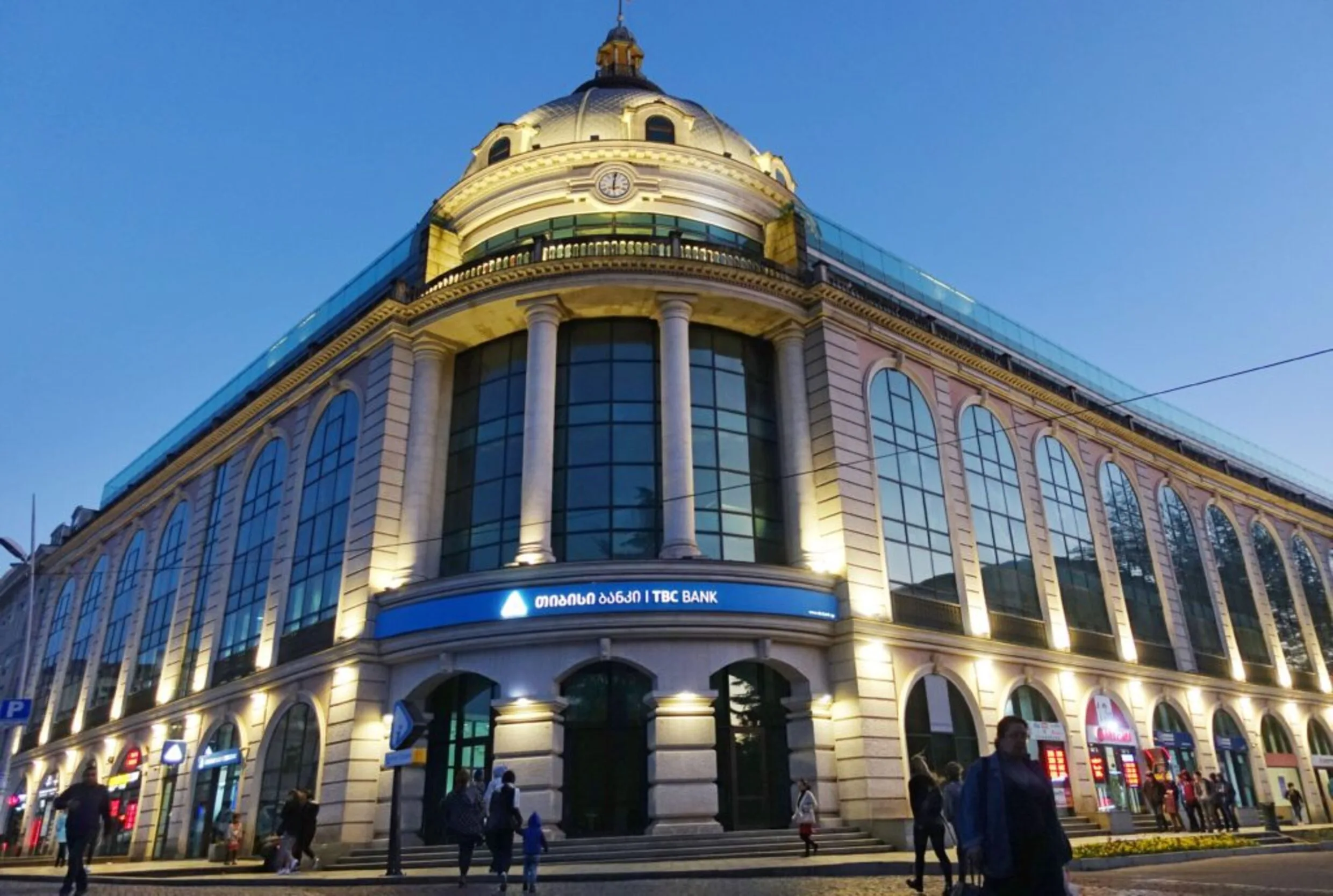
- ✛Swiss private banks often require USD 1–2.5 million in the premium segment; Georgian premium programmes start from USD 0.
- ✛As an EEA member, Liechtenstein is bound by MiFID II, PRIIPs, DAC6 and CRS – with consequences for access to US ETFs.
- ✛Georgian banks show strong figures: TBC total capital ratio around 22%, return on equity around 20–25%.
- ✛CRS has been operational in Georgia since 2024 – the difference lies in more pragmatic onboarding, not laxer reporting.
- ✛Deposit insurance in Georgia is well below the EU and Swiss threshold of around 100,000.
The starting point
Perpetual travellers, digital nomads and international entrepreneurs looking for a reliable banking location for their capital sooner or later end up at the classic Swiss private bank account. At the same time, the expat scene increasingly talks about Georgia as a pragmatic, cheaper alternative. This article compares both options factually – including the points where common comparisons are too uncritical or outdated.
As SWICOR (Swiss Corporate Solutions Ltd.) we particularly support international structuring around US companies – and banking is often a key building block.
This article is for general information and does not replace individual financial, tax or legal advice. Bank terms, figures and regulatory requirements change constantly and should be verified directly with the bank before making a decision.
Why the Swiss private bank account has changed its business model
The image of the discreet Swiss banker dates from a time before the end of classic banking secrecy. Since the introduction of the automatic exchange of information (AEOI/CRS) and sustained pressure from US regulators on the correspondent banking network, Swiss and Liechtenstein institutions have noticeably changed their business model: away from niche providers of discreet wealth management towards a heavily regulated segment that is increasingly selective about its clients.
This selectivity shows in rising minimum deposits for clients resident outside established Western jurisdictions and in noticeably more intensive due diligence on account management. This is not malicious harassment but a direct consequence of so-called de-risking: banks carry real regulatory risk when serving clients with complex international structures and react cautiously.
Source of wealth and source of funds: where the compliance burden comes from
Two terms shape everyday life in international private banking:
- ✛Source of wealth (SoW): where does a person's total wealth historically come from?
- ✛Source of funds (SoF): where does a specific, current transfer come from?
Both checks are regulatory in origin (anti-money laundering, FATCA follow-on obligations, sanctions screening) and not specifically Swiss. Comparable requirements apply at essentially every regulated bank worldwide that works with US dollar correspondent banks.
In practice, however, clients with international, multi-layered wealth – for example property sales many years ago, historical cryptocurrency transactions via exchanges that have since been wound up, or revenue from numerous small consumer payments – often report a documentation burden they perceive as disproportionate. A pattern repeatedly described by professionals in DACH private banking.
Liechtenstein: why EEA membership is a double-edged sword
Liechtenstein is often presented as a more agile alternative to Switzerland – rightly so when it comes to foundation law. On the banking side, however, Liechtenstein as a member of the European Economic Area (EEA) is subject to the same EU regulations as institutions elsewhere in the EEA:
- ✛MiFID II and PRIIPs: for retail investors this means a restricted product range. US-domiciled ETFs require a standardised EU key information document (KID) for distribution to EU/EEA retail investors; since many US issuers do not provide one, investors are often steered to European UCITS alternatives.
- ✛DAC6: the EU reporting obligation for cross-border tax arrangements requires intermediaries such as banks and trustees in the EEA to report certain arrangements to the tax authorities.
- ✛CRS/AEOI: Liechtenstein applies the automatic exchange of information consistently; account data flows to the reported country of residence.
Georgia is neither in the EU nor the EEA, so MiFID II and DAC6 do not apply there – a structural difference that matters in practice for access to US financial products such as ETFs.
The numbers: Switzerland, Liechtenstein and Georgia
The following figures reflect typical, publicly advertised terms and should always be verified with the respective bank before deciding, as fee models change constantly:
| Fees & terms | Swiss private banks (e.g. UBS, Julius Bär) | Liechtenstein banks (e.g. LLB, Bank Frick) | Georgia premium (BoG SOLO / TBC Concept) |
|---|---|---|---|
| Minimum deposit | approx. USD 1–2.5 million in the premium segment | approx. CHF 50,000–500,000 depending on residence | from USD 0, access via monthly fee |
| Account fee p.a. | approx. CHF 500–2,000 | approx. CHF 300–800 | approx. EUR 100–180 |
| International transfer (SWIFT) | approx. CHF 40–100 + third-party charges | approx. CHF 30–80 | approx. 0.2% |
| Custody fee p.a. | approx. 0.3–0.5% of volume | approx. 0.2–0.4% | approx. 0–0.1% (via brokerage) |
Georgian premium programmes such as SOLO by Bank of Georgia or TBC Concept offer a personal contact, multi-currency accounts (GEL, USD, EUR, GBP) and access to their own client lounges in Georgia's major cities – without a seven-figure minimum deposit.
Macroeconomic figures fact-checked
Comparing fee structures alone says little about the actual stability of a financial centre. The following figures were researched for this article:
Government debt (general government, relative to GDP)
Depending on whether one looks only at the federal level or at total general government debt including cantons and social insurance, Switzerland has a gross general government debt ratio of around 37–39%; federal debt alone is much lower at about 15–16%. Germany stood at a debt ratio of 63.5% at the end of 2025 and, according to the EU Commission forecast, will rise to around 65.8% in 2026. Georgia stood at around 36.1% in 2024 – of a similar order to the Swiss general government ratio.
Capital adequacy ratio (CAR)
Georgia's TBC Bank most recently reported a total capital ratio of around 22% in Georgia (CET1 around 16.6%) – well above the Basel III minimum requirements and at the upper end internationally compared with European universal banks, which often range between 14% and 18%.
Profitability (ROE, cost-to-income)
Georgian banks such as TBC and Bank of Georgia have for years reported an above-average return on equity of around 20–25% with a cost-to-income ratio often below 40–50%. That is considerably more profitable than the European average, where returns on equity are often in the single digits to low double digits.
Credit quality (NPL ratio)
Caution is advised with overly optimistic older figures here: non-performing loans (NPL) of the TBC group recently stood at around 2.7–3.0% (group-wide, including the Uzbek business), not the sometimes quoted 1.7%. For the Georgian core business alone the figures may be lower but fluctuate quarterly – a figure that should always be checked before deciding.
Deposit insurance
To the best of current knowledge, statutory deposit insurance in Georgia covers a considerably lower amount than the EUR 100,000 threshold in the EU or Switzerland. Anyone holding larger sums in Georgia therefore relies more on the bank's own capitalisation and earning power than on a state guarantee fund – a point to factor into the risk assessment.

CRS in Georgia: what is true – and what is not
One point where caution is needed in some comparisons: the claim that the automatic exchange of information (CRS) is still technically "patchy" or unreliable in Georgia.
According to the current assessment of the OECD Global Forum, this is no longer the case: Georgia transposed the CRS standard into national law back in 2023, completed due diligence for new and existing accounts on time and went through its first full reporting cycle in 2024 (2023 data was exchanged). From January 2026 the extended CRS 2.0 version already applies, covering digital assets and e-money products more comprehensively. The automatic exchange of information in Georgia is therefore operationally established, not technically patchy. More in our 2026 CRS country list.
What actually differs from Swiss and Liechtenstein practice is rather the handling of onboarding and ongoing updates: Georgian banks generally accept a self-certification of tax residence without the recurring "re-KYC" process with notarised utility bills common at DACH institutions. That is a difference in the user-friendliness of the process, not in the reliability of reporting – and it should be understood that way.
Anyone who registers an address that does not correspond to their actual tax residence in order to avoid reporting is operating outside clean compliance, regardless of the banking location. That applies in Georgia just as much as in Switzerland or Liechtenstein.
Conclusion: which banking location suits whom
- ✛Swiss private banks remain relevant mainly for very large, traditional fortunes seeking a link to the Western European legal area and an established brand reputation – with correspondingly high minimum deposits and compliance effort.
- ✛Liechtenstein scores with excellent foundation law but, as an EEA member, is bound by EU standards on product range (MiFID II) and reporting (DAC6, CRS).
- ✛Georgia offers lower entry barriers, competitive fees and – measured by capital ratios, profitability and government debt – a surprisingly solid banking landscape for day-to-day business and free investment. Automatic exchange of information now works there as reliably as in Switzerland or Liechtenstein; the difference lies in more pragmatic onboarding, not laxer reporting.
Which banking location suits you ultimately depends on the size of your assets, your actual tax residence and your need for specific financial products. If you also want to plan suitable banking as part of an international structure, for instance with a US LLC or corporation, we are happy to discuss it in an individual consultation.
Frequently asked questions
Does a Swiss bank account still make sense for international entrepreneurs?
For very large, traditional fortunes with a link to the Western European legal area, it can. For small and medium-sized assets, the minimum deposits and compliance effort are now often disproportionately high.
Is Georgia really less reliable than Switzerland on CRS?
No. Georgia has implemented CRS operationally since 2023/2024 and is reviewed by the OECD Global Forum accordingly. The difference lies in more pragmatic onboarding, not less reliable reporting.
How does deposit insurance in Georgia compare with the EU or Switzerland?
It is well below the threshold of around EUR/CHF 100,000 customary in the EU and Switzerland. Larger balances should therefore be assessed based on the individual bank's balance sheet.
Why can't I buy US ETFs as a retail investor in Liechtenstein?
Because Liechtenstein, as an EEA member, must apply MiFID II/PRIIPs, which require an EU-compliant key information document for distribution to retail investors – one that many US ETF providers do not supply.
Are Georgian banks really more stable than major Swiss banks?
On classic metrics such as capital ratio, profitability and credit quality, Georgian banks currently perform well, partly better than European averages. A comparison should also consider the lower deposit insurance and Georgia's different geopolitical risk.
Which banking location fits your structure?
We assess your assets, tax residence and product needs and plan the right banking setup – in Switzerland, in Georgia or in combination.
This article is a general analysis and does not replace individual tax or legal advice. Regulations change; the information reflects the status at the date of publication.